Showing posts with label Ethiopia. Show all posts

Wednesday, January 25, 2017

Tourism In Ethiopia After The Unrest


Violent protests in some regions have led to Foreign Office warnings against holidays in Ethiopia, but though messages are mixed, most local operators report that it’s business as usual Savage dissents in a few districts have prompted to Foreign Office notices against occasions in Ethiopia, however messages are blended, most nearby administrators report that it's nothing new With nine Unesco world legacy destinations and an archeological history that about-faces to the primary people, Ethiopia's antiquated fortunes – alongside its national parks and mountain ranges – have been drawing a developing number of visitors, following quite a while of being all the more emphatically related by the west with starvation.


Be that as it may, its thriving – and indispensable – traveler industry confronts crumple this month, after fierce hostile to government dissents the nation over drove the Ethiopian government to announce a six-month highly sensitive situation. The US and UK are both cautioning natives against everything except fundamental go there.

Visit administrators Saga, Cox and Kings and Kuoni are among those crossing out excursions to the nation, refering to Foreign Office (FCO) counsel to maintain a strategic distance from the Amhara and Oromia districts, which have seen developing agitation, mass captures and police killings of nonconformists.

"The highly sensitive situation and FCO tourism warning have taken an overwhelming toll on appointments for the following six months," said Nigel Nicoll of the African Travel and Tourism Association (Atta), who included that Ethiopia had been one of Africa's quickest developing goals.

In 2015, the European Council on Tourism and Trade named Ethiopia the world's best visitor goal, and a week ago Lonely Planet positioned the nation among the best to visit in 2017. This year, Ethiopia was set to outperform a million vacationers interestingly (less than 200,000 individuals went to in 2004).

In any case, Ethiopia's primary vacationer destinations are well far from the areas seeing the most exceedingly terrible interruption, with neighborhood administrators focusing on that the hazard to sightseers is low.

"None of the vacationer destinations in Addis has been influenced: our visits there are running regularly," said Eliza Richman of Go Addis Tours. "Our appointments for October were generally the same as a year ago, yet individuals are for the most part reserving visits finally. We have not very many propel appointments for November."

Andinet Feleke, who runs Jacaranda Tours and is a board individual from the Ethiopian Tour Operators Association, included: "Tourism has never halted and critical number of guests are having trips in all traveler goals. We had a gathering on the dates when dissents had heightened and none of them experienced an issue. I trust outside governments will have an adjusted approach and adjust their duty to ensure their subjects with the effect their choice will have on the work of millions here."

While significant visit administrators will dependably concede to Foreign Office notices, more gutsy explorers are not deflected, however the messages, even from inside Ethiopia, are blended.

"The absence of consistency is worrisome," said Shanny Hill of TDA Global Cycling, a Canadian organization that has run visits including Ethiopia for a long time and is prepares with a trek in February. "An expat associate in Addis makes it appear to be critical (street terminations, troops, confinements on travel – all unsubstantiated), however an Ethiopian who we trust lets us know everything is currently fine. For a visit administrator it has been elusive solid information."

The trust is that the highly sensitive situation will be fleeting, after a short time term harm is finished. "For whatever length of time that the FCO's recommendation stays set up, Atta firmly encourages against go to the territories concerned," says Nicoll. "On the off chance that sightseers were included in an occurrence, their travel protection may well be invalid. Yet, I am sure that when peace is reestablished all through the vacationer areas, and the FCO lifts its tourism warning, tourism numbers will restore rapidly."

Tuesday, November 1, 2016

Northern Ethiopia Tourist Attractions

Image result for Northern Ethiopia

The all around characterized 'verifiable circuit' through northern Ethiopia shapes the center of the nation's traveler industry. It is likely no distortion to say that 90% of explorers to Ethiopia base the greater part of their schedule around this circuit, and which is all well and good. There is nothing in sub-Saharan Africa – as it were, nothing else on the planet – that readies the guest for the abundance of authentic and social fortunes, both old and living, contained in northern Ethiopia. The circuit turns around four urban areas, all altogether different from the others, and followed in this segment in the clockwise course supported by most visit administrators and free explorers.

The standard first stop in northern Ethiopia is the present day city of Bahir Dar, a clamoring business fixate set on the southern shore of Lake Tana, the biggest waterway in Ethiopia and authority wellspring of the Blue Nile. Notwithstanding facilitating an interesting customary every day market and rich birdlife, Bahir Dar shapes the undeniable base for a few day excursions: to the huge number of air medieval cloisters specked around the forested islands and landmasses of Lake Tana, and in addition to the shocking Blue Nile Falls (outstanding, that is, on the inexorably uncommon events when the Nile's water hasn't been occupied to fuel a neighboring hydro-electric generator).

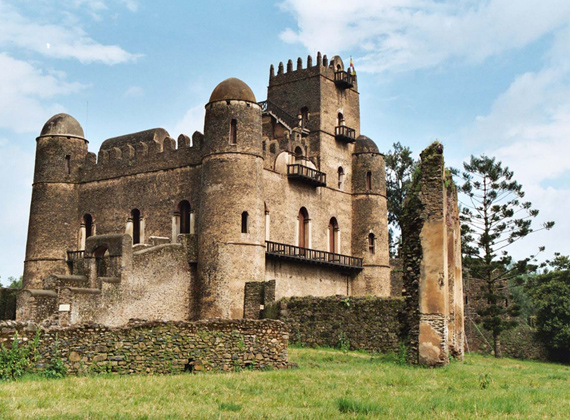
Toward the north of Lake Tana, a mainstream second stop on the northern circuit is Gondar, which served as Ethiopia's capital for just about 300 years from 1635 onwards, and is today noted for its amazing sixteenth century palaces and also the perfectly designed Church of Debre Birhan Selassie. Toward the north of Gondar, falsehoods the staggeringly grand Simien Mountains National Stop, home to the nation's primary convergences of the endemic gelada mandrill and Walia ibex. Taking after the late development of an unpleasant street into the Simien Mountains, this exquisite range – generally the protect of solidified trekkers and explorers – additionally frames a practical objective for a day or overnight 4x4 outing out of Gondar.

Stone sanctuary at Yeha by Ariadne Van Zandbergen Africa Picture Library www.africaimagelibrary.com

A typical third stop on the recorded circuit is the antiquated capital of Axum, which lies near the Eritrean fringe at the heart of the previous Axumite Realm, the overwhelming monetary and political constrain in the area for about a thousand years preceding its crumple around AD700. Axum is best known today for the monster engraved monoliths (stelae) that tower over the upper east of the town. In any case, the whole city remains over an intriguing randomness of old relics – grimy tombs, demolished royal residences, shake etchings and engraved tablets – that compensation aggregate demonstration of the venture and many-sided quality of what is maybe the most cryptic of all the antiquated civilisations of the Old World. This riddle is opened up when one visits the close-by Yeha Sanctuary, assessed to have been developed 2,500 years back. Axum's Congregation of Tsion Maryam – asserted by Ethiopians to house the Ark of the Agreement – has for over 1,600 years lain at the profound heart of the Ethiopian Standard Church; the Axumite design legacy lives on in a few old places of worship, eminently the male-just clifftop diamond that is the Cloister of Debre Damo.

(Photograph: Yeha Sanctuary © Ariadne Van Zandbergen, Africa Picture Library)

For most guests to Ethiopia, the highlight of the northern circuit is the medieval capital of Lalibela, where high in the cold heaps of Wolo stands a complex of twelve shake cut places of worship frequently and reasonably positioned as the eighth ponder of the old world. Reachable just by walking or by donkey until two or three decades back, however now overhauled by day by day transports and flights, these places of worship remain as an uplifting dynamic hallowed place to a Christian civilisation that pre-dates its northern European identical by hundreds of years. Also, around Lalibela lie a few more minister jewels: the lovely Axumite surrender church of Yemrehanna Kristos, the detached cloisters and houses of worship around Bilbilla, the remote montane withdraw of Asheton Maryam … all set in the midst of probably the most phenomenal mountain view on the African mainland.

The dominant part of voyagers adopt one of three strategies to investigating the 'enormous four' urban areas of the northern circuit. The in the first place, and less strenuous, approach is to fly between the previously mentioned quits, investigating the towns, and now and then orchestrating day journeys to adjacent spots of premium. One could, in principle, see the best of the northern circuit more than five days, since flights for the most part take just a hour or something like that, abandoning one with a lot of time to investigate in the middle. Practically speaking, be that as it may, the mix of sudden timetable changes, infrequent deferrals and the need to reconfirm every single local flight at the purpose of takeoff, makes it fitting to commit around eight days to a flying outing around the northern circuit. This will take into consideration an entire day between flights to investigate each of the significant towns at relaxation.

An all the more requesting choice is to drive around the verifiable circuit in a leased 4x4 with a driver as well as guide, or – even harder – to do the entire circuit utilizing transports and other open transport. The weakness of street travel is that the time has come devouring and now and again depleting – late changes in any case, a reasonable least of 12–14 days is required to cover this circuit by street, and three weeks or longer would be better, particularly on the off chance that you are utilizing open transport. The fundamental points of interest of rolling over flying are firstly that you get the chance to see significantly a greater amount of the excellent mountain landscape, and besides that you have the chance of getting away from the moderately well-trodden vacationer trail to visit zones where sightseers remain an occasional sight. As an exhaustive read through this area will make richly clear, there is limitlessly more to northern Ethiopia than its four built up authentic urban areas. The rundown of off-the-beaten-track potential outcomes is for all intents and purposes unending; to name one illustration, the immeasurably underrated shake cut places of worship of Tigrai alone could keep an intrigued voyager occupied for quite a long time.

Sunday, October 30, 2016

Gondar City Review

Image result for Gondar

Portrayal

Gondar is 50 kilometers north of Lake Tana, 500 kilometers north of Addis Ababa and settles in the foothills of the Simien mountains at 2,200 meters above ocean level. Gondor was the capital of Ethiopia from the ascent of Fasilades to the fall of Tewodros (1855-68) which is reflected in the numerous strongholds and castles in the city.

Attractions

Strongholds

The city's primary supreme region, known as the Illustrious Fenced in area, covers a range of 7.7 hectares and contains five mansions, raised walkways and associating burrows encompassed by high stone dividers.

The most seasoned of these is the Château of Fasilades. Worked of stone in the mid-seventeenth century it mirrors various impacts, Axumite, Portuguese and Indian. The upper story offers all encompassing perspectives and Lake Tana is unmistakable on a crisp morning. The palace has been redesigned as of late.

Fasilades grandson, Lyasu the immense, manufactured his own manor and embellished it with ivory, gold and valuable stones yet a quake in the mid nineteenth brought on extreme harm.

Different Attractions

The royal residence of Ras Beit, was inherent the eighteenth century as a private living arrangement of the well known ruler producer, Ras Mikael Sehul and has been in continuos occupation from that point forward.

Shower of Fasilades is an indented pool still utilized for the Timkat Celebration as a part of January.

Convenience

Abba Jelli Inn, spotless, great esteem with perspectives of the mansions.

Fasilades, on the airplane terminal street. Spotless and amicable, safe stopping for vehicles and a decent eatery.

Patrice Lumumba, near the piazza/broadcast communications bldg (close to the Misrak), the sign is in Amharic You can bargain over the cost of the lodging, eatery connected.

Yimam, great esteem and with an eatery adjacent. Additionally has safe stopping office for vehicles.

There are numerous other E-review extend inns in the region of the piazza/telecom structures.

Fagera Lodging, fundamental, initially worked by one of Mussolini's fascists as an estate, roomy rooms.

Misrak Annuity, Woreda 1, Kebeale 2, No 217, PO Box 391.

Where to Eat

Quara Lodging, government run inn with eatery. Great esteem.

Tele Club, beside the stairs of the Mail station - espresso, bread, fabulous breakfasts.

Ethiopia Bistro, enchanting, out-dated, ground floor of inn, stuffed throughout the day, incredible espresso.

There are numerous other modest bistros in the downtown area. A hefty portion of the shoddy inns additionally offer sustenance.

Arriving and Away

Air:

Ethiopian Aviation routes, PO Box 130, Tel. 08-110129, flies every day to Gondar. Air terminal is 17 kilometers from town. You are prescribed to book/affirm forward flights at the Ethiopian Aircrafts office in Gonda (in light of the fact that office has PCs - there's nothing mechanized in either Axum or Lalibela.

Street:

Course from Addis is by means of Bahar Dar and the entire adventure is 600 kilometers Travel is troublesome in

June-september when the downpours are substantial. it is reasonable to permit 3 days for the voyage there, with stops in Debre Markos or Dejen and Bahar Dar. There are customary transports running along this course. From Bahar Dar the voyage takes 5 hours. There is currently an immediate transport benefit amongst Gondar and Shire (Inda silase) leaving at 0630 from both Gondar and Shire. In any case if the transport tops off before the arranged takeoff time, it leaves; so touch base by no less than 0530. The adventure takes around 11 hours and there is a stop at Debark

(4 hours from Gondar).

Banks

There are banks which will change cash in Gondar.

Aksum

The ruins of the ancient city of Aksum are found close to Ethiopia's northern border. They mark the location of the heart of ancient Ethiopia, when the Kingdom of Aksum was the most powerful state between the Eastern Roman Empire and Persia. The massive ruins, dating from between the 1st and the 13th century A.D., include monolithic obelisks, giant stelae, royal tombs and the ruins of ancient castles. Long after its political decline in the 10th century, Ethiopian emperors continued to be crowned in Aksum.
Outstanding Universal Value
Brief Synthesis
Situated in the highlands of northern Ethiopia, Aksum symbolizes the wealth and importance of the civilization of the ancient Aksumite kingdom, which lasted from the 1st to the 8th centuries AD. The kingdom was at the crossroads of the three continents: Africa, Arabia and the Greco-Roman World, and was the most powerful state between the Eastern Roman Empire and Persia. In command of the ivory trade with Sudan, its fleets controlled the Red Sea trade through the port of Adulis and the inland routes of north eastern Africa.
The ruins of the ancient Aksumite Civilization covered a wide area in the Tigray Plateau. The most impressive monuments are the monolithic obelisks, royal tombs and the palace ruins dating to the 6th and 7th centuries AD.
Several stelae survive in the town of Aksum dating between the 3rd and 4th centuries AD. The largest standing obelisk rises to a height of over 23 meters and is exquisitely carved to represent a nine-storey building of the Aksumites. It stands at the entrance of the main stelae area. The largest obelisk of some 33 meters long lies where it fell, perhaps during the process of erection. It is possibly the largest monolithic stele  that ancient human beings ever attempted to erect. 
A series of inscription on stone tablets have proved to be of immense importance to historians of the ancient world. Some of them include trilingual text in Greek, Sabaean and Ge'ez (Classical Ethiopian), inscribed by King Ezana in the 4th century AD.
The introduction of Christianity in the 4th century AD resulted in the building of churches, such as Saint Mary of Zion, rebuilt in the Gondarian period, in the 17th century AD, which is believed to hold the Ark of the Covenant.
Criterion (i): The exquisitely carved monolithic stelae dating from the 3rd and 4th centuries AD are unique masterpieces of human creative genius.
Criterion (iv): The urban ensemble of obelisks, royal tombs and churches constitute a major development in the cultural domain reflecting the wealth and power of the Aksumite Civilization of the first millennium AD.
Integrity
The boundaries of the property, which encompass the entire area of ancient Aksum town, need to be adequately delineated and approved by the Committee.
One obelisk, removed from the site and taken to Rome as a war trophy during the Italian occupation, was returned to Aksum in 2005 and re-erected in in 2008.
Furthermore, at the time of inscription, it was noted that small, modern houses were built over most of the site, obscuring the majority of the underground Aksumite structures. Some of them still remain covered by modern houses. In 2011, the construction of a new museum began in the main Stelae Field and, unless amended, the height of the museum will have a highly negative visual impact on the property. Flooding has also become a major problem in the 4th century AD Tomb of the Brick Arches and other monuments. 
For the reasons mentioned above, the integrity of the property remains vulnerable.
Authenticity
The authenticity of the obelisks, tombs and other monuments remain intact, although they are vulnerable due to lack of conservation. However, the authenticity of the whole property in terms of its ability to convey the scope and extent of ancient Aksum and its value is still vulnerable to lack of documentation, delineation and lack of planning controls. The monuments need to be related to the overall city plan, in spatial terms.
Protection and Management Requirements
The city of Aksum was put under the jurisdiction and protection of the National Antiquities Authority in 1958. No special legal framework is provided to protect the Obelisks of Aksum, except the general law, Proclamation No. 209/2000, which also established the institution in charge, the Authority for Research and Conservation of Cultural Heritage (ARCCH).
The property is managed at three levels – the site; the region; and the Federal administration. ARCCH prepared a proclamation that mapped and identified the precise area to be protected with local site authorities. It is reviewing the components and may wish to suggest changes to the number and/or size of the property.
The boundary and the property’s management plan are not yet established. There is a need to submit an up-dated map of the property to clearly indicate the boundary, to produce and submit a management plan and to delineate and submit a buffer zone. There is also a need for adequate legal protection to be put in place.