Showing posts with label Cities Review. Show all posts

Tuesday, November 1, 2016

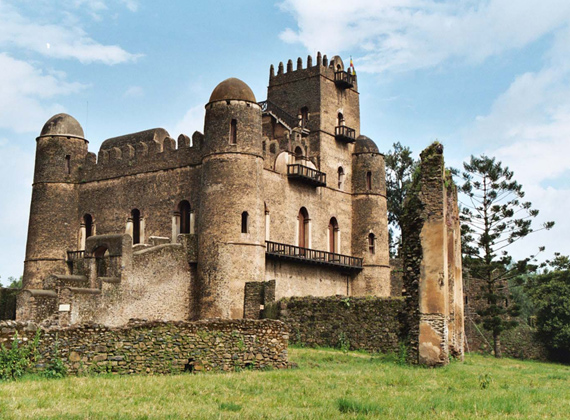
Gondar’s Royal Enclosure

Image result for Gondar Ethiopia

The Fasil Ghebbi (Imperial Walled in area) lies at the heart of present day Gondar and gives the city quite a bit of its character. Encompassed by high stone dividers, the fenced in area covers a territory of 70,000m² and contains six strongholds, a complex of interfacing passages and raised walkways, and a few littler structures. It's an interesting spot to investigate, and one could without much of a stretch spend a few hours here. At the entryway an extra charge of US$6 is exacted. Tickets are substantial for the day of procurement incorporate still photography. A camcorder draws in an extra charge of US$5. For a first-time guest, procuring an official guide is suggested. They are for the most part entirely learned and will bring up components that may somehow be missed. Manage expenses begin at around US$9 for a gathering of one to five people; it is best that you first stroll around under their educational cost, then profit for your own particular later to drench up a portion of the climate.

The most amazing manor inside the fenced in area is the first worked by Fasilidas, c1640, in part reestablished in the mid twentieth century, and all the more completely reestablished, utilizing the first development strategies, with UNESCO subsidizing somewhere around 1999 and 2002. Fasilidas' Manor is made of stone and demonstrates a one of a kind blend of Portuguese, Axumite and even Indian impacts. The ground floor comprises of gathering and feasting territories. The dividers are finished with an image like the Star of David, which turned into the insignia of the Ethiopian imperial family after the Solomonic tradition recovered the honored position in the thirteenth century. The primary floor top of the stronghold was utilized for supplication and religious functions, and it is additionally where Fasilidas tended to the townsfolk. Fasilidas' petition room, additionally on the principal floor, has four windows, each one of which faces a congregation. Stairs lead from the rooftop to the little second-floor room that Fasilidas utilized as his resting quarters. Over this is an open overhang, which was likely the watchtower. This third-floor stage, 32m over the ground, offers sees every which way; on a crisp morning, you can even observe Lake Tana upcoming, underscoring the vital favorable position of picking Gondar as a capital.

Atmosphere of Ethiopia

Image result for ethiopian tourist destinations
Atmosphere

Ethiopia demonstrates a wide climatic variety, running from the pinnacles of Bunch, which get intermittent snowfall, to customary daytime temperatures of more than 50˚C in the Danakil Leave. When in doubt, the focal good countries have a mild atmosphere and normal daytime temperature of 16˚C, belying their vicinity to the Equator. The eastern marshes and the far south are dry and hot. The western swamps are clammy and hot, making them the one a player in the nation that feels really tropical. The southern Fracture Valley, quite a bit of which lies at the generally high height of 1,500m, is mild to hot and occasionally clammy.

The precipitation design in the northern and focal good countries is that the heft of the rain falls between mid June and early October. This example changes as you head encourage south: the stormy season in the Break Valley for the most part begins and finishes a couple of weeks sooner than in the good countries, while in South Omo the majority of the rain falls in Spring, April and May, and different parts of the south have two blustery seasons, falling either side of the high countries' blustery period of July to September. As opposed to famous recognitions, most good country parts of Ethiopia get a solid normal yearly precipitation figure, with the far west being especially damp – surely a significant part of the southwest gets a normal yearly precipitation in abundance of 2,000mm.

The upper east good countries are much drier, and have a less solid blustery season, than other good country parts of Ethiopia. Tigrai and parts of Amhara are inclined to finish precipitation disappointment; this has a tendency to happen about once consistently. It was such a precipitation disappointment, to the point that, exacerbated by strategies of the Mengistu government, prompted to the infamous starvation of 1985. In ordinary years, be that as it may, the good countries get to be something of a mudbath amid the downpours, with a normal of 1,000mm falling more than a few months. Luckily, from a vacationer's perspective, rain tends to fall in emotional tempests that end as all of a sudden as they begin, a circumstance that is boundlessly more helpful for go than days of extended sprinkle.

At the point when to visit

Ethiopia can be gone to whenever of year. Individuals are some of the time exhorted against going amid the stormy season, from June until early October, yet with Lalibela now being available all year through this is less of an issue than it used to be. In fact, the blustery season has a few points of interest, among them that there are less visitors at prominent locales, for example, Lalibela, and that the view is a lot more great when the wide open is green and all around watered. An exquisite time of year is September through to early October, when the entire nation is a mob of wild meskel blossoms.

The most prominent time to visit Ethiopia is amongst October and January, when the downpours are over however the wide open is still entirely green. Numerous voyagers attempt to plan their outing to match with imperative celebrations, for example, Ethiopian New Year, Ethiopian Christmas, Timkat or Meskel. The European winter is additionally the best time for feathered creatures, as occupant species are supplemented by huge quantities of Palaearctic transients.

One range where travel alternatives are confined amid the downpours is South Omo. The downpours here commonly fall in April and May, however they may run before or later, for which reason Walk and June are likewise presumably best kept away from, just like the short rains in October.

Highlights and recommended agendas

Schedules are subjective things, reliant on how much time you have, your picked or upheld style of travel, and your interests. So as opposed to endorse a couple of particular schedules, this area endeavors to organize what is and isn't conceivable inside the limits of an ordinary excursion period. Maybe the most vital single thing of counsel with regards to make a trip in Ethiopia is to apportion your time sensibly. You can, for example, effectively cover the four primary attractions of the chronicled circuit via air in eight to ten days. You could likewise do it in five to seven days at a push, yet in the event that you were compelled to that kind of period, it would be more reasonable and pleasant to cut one of the four principle destinations from your agenda. Much the same can be said for guests transporting around the recorded circuit. On the off chance that you truly needed to, you could cover the fundamental attractions in less than two weeks, yet just in the event that you are set up to have at any rate a large portion of your days devoured by long and frequently uncomfortable transport trips.

The verifiable circuit

Ethiopia's principle traveler center is the all around characterized verifiable circuit in the north. Guests tend to go in a clockwise circle from Addis Ababa, going through the four set up visitor focuses of Bahir Dar (the base for going to Lake Tana's religious communities and Tis Abay Waterfall on the Blue Nile), Gondar, Axum and Lalibela.

By street, this circle covers a separation of more than 2,500km. Streets in the district have enhanced extraordinarily lately, yet numerous are still in poor repair, and go through rugged territory that isn't helpful for speed. At the end of the day, going by transport or private vehicle is not reasonable in the event that you need to surge between destinations. Luckily, Ethiopian Aircrafts covers all the fundamental towns on the recorded circuit. Albeit inward flights are sensibly proficient, they won't really keep running now and again that permit you to do any critical touring on the day you fly, and postponements are ordinary. On this premise, it's best to permit yourself a crisp morning between flights in each place you visit. This implies to visit every one of the four noteworthy focuses you require eight evenings out of Addis. On the off chance that you don't have this kind of time, you could consider cutting Bahir Dar or Axum from the schedule. Then again, with additional time accessible, you could without much of a stretch dedicate a second day to Axum or Bahir Dar, and any number of days to going to shake slashed houses of worship in the Lalibela area (by donkey or by walking from town).

Two different attractions on the recorded circle that may hold any importance with short-stay guests are Simien Mountains National Stop and the stone slashed places of worship of Tigrai. The Simiens are gone to from Gondar – you can achieve the recreation center base camp at Debark in a morning by transport or taxi. The prime attractions here are awesome landscape and the chance to see three of Ethiopia's four endemic substantial warm blooded creature species. Going via auto, permit no less than two evenings to see the Simiens appropriately. Climbers would need to set aside no less than four days (counting go to or from Gondar), yet six days – or significantly longer – would be better. The stone cut houses of worship of Tigrai lie north of the local capital of Mekele. The potential outcomes around there are for all intents and purposes interminable, going from going to a portion of the more available houses of worship over a day or two on open transport through to seven-day climbs or driving treks in the Gheralta zone. All that need be said here is that Ethiopian Carriers travel to Mekele, however going by from Axum is another suitable choice.

Visiting the recorded circuit by open transport is generally direct. In the event that you have additional time than cash, going by transport is much less expensive than flying on a step by step premise. Be that as it may, in light of the fact that it will take any longer, the general cost will be much the same. The benefits of transport travel are that it permits you to splash up the grand view and to visit more dark spots of intrigue. To do a full voyage through the verifiable circuit would go through the best some portion of ten days on transports alone (two days less on the off chance that you avoided Lalibela at Woldia). Taking into consideration no less than one entire day at each of the real vacation spots, and a couple days' rest here and there, anything a great deal under three weeks – four weeks on the off chance that you have contemplations of climbing in the Simiens or investigating Tigrai inside and out – would be substantial going.

In the event that you don't have this kind of time, two bargain alternatives exist. One is to skip Axum and slice opposite Gondar to Woldia which, on the off chance that you needed to see Lalibela, would in any case require right around a week of immaculate travel and a tight least of ten days by and large. A more sensible bargain may be to go similarly as Axum by transport, then to fly back to Addis by means of Lalibela.

The south and east

The southern Crack Valley lake locale is the most prevalent in Ethiopia after the verifiable circuit. There is, nonetheless, no single clear circuit through the locale – yet there is no urgent need to thoroughly consider your planning. Shashemene, the vehicle center point of the south, is just five or six hours from Addis by transport, and even from more scattered spots like Harar, Arba Minch, Negele Borena or Goba, you are inside an agreeable two days' scope of the capital. At the end of the day, go in the vast majority of this locale can be as sorted out or as unusual as your disposition directs.

On the off chance that you veer towards sorted out travel, the most ideal approach to see a decent lot of the south is to join a visit or contract a vehicle and driver (in Ethiopia, visits and auto procure for the most part add up to a similar thing) through an Addis Ababa administrator. Visits can be masterminded to provide food for most tastes, yet by and large you would take a gander at a few days to see a couple Crack Valley lakes, and you could broaden this by a day or two by affixing either Flooded or Nechisar National Stop to your schedule. To see South Omo legitimately, eight days is indisputably the base span for a round street trip from Addis Ababa.

A more unusual approach is only that. You could invest weeks investigating the south and east and it is senseless to attempt to recommend a particular open transport schedule. The one place in the south that ought to be singled around here is Parcel National Stop. Not just is this the one place in southern Ethiopia equipped towards climbing, however it likewise offers the most essential convergence of Ethiopia's endemic creatures. Not at all like at Simien, you can see Bundle's endemic well evolved creatures effectively without hiking. Bundle is additionally home to about portion of Ethiopia's endemic flying creature species, and the majority of these are anything but difficult to find in the territory. Autonomous voyagers ought to permit two days in every bearing between

Harrar Review Part 2

Old Harar enclosed by the jugol (defensive wall)

Harar, once in the past composed Harrar[1][2] and referred to its occupants as Gē,[3] is a walled city in eastern Ethiopia. It was some time ago the capital of Hararghe and now the capital of the cutting edge Harari District of Ethiopia. The city is situated on a ridge in the eastern augmentation of the Ethiopian Good countries, around five hundred kilometers from Addis Ababa at a height of 1,885 meters. In view of figures from the Focal Factual Organization in 2005, Harar had an expected aggregate populace of 122,000, of whom 60,000 were guys and 62,000 were females.[4] As per the enumeration of 1994, on which this gauge is based, the city had a populace of 76,378.

For a considerable length of time, Harar has been a noteworthy business focus, connected by the exchange courses with whatever remains of Ethiopia, the whole Horn of Africa, the Middle Eastern Landmass, and, through its ports, the outside world. Harar Jugol, the old walled city, was recorded as a World Legacy Site in 2006 by UNESCO in acknowledgment of its social heritage.[5] It is in some cases referred to in Arabic as "the City of Holy people". As indicated by UNESCO, it is "viewed as 'the fourth heavenly city' of Islam" with 110 mosques, three of which date from the tenth century and 102 shrines.[6][7]

The Fath Madinat Harar records that the minister Abadir Umar ar-Rida and a few different religious pioneers settled in Harar around 1216 (612 hijri year).[8] Harar was later made the new capital of the Adal Sultanate in 1520 by the Sultan Abu Bakr ibn Muhammad.[9] The city saw a political decay amid the resulting Emirate of Harar, just recapturing some hugeness in the Khedivate of Egypt period. Amid the Ethiopian Domain, the city rotted while keeping up a specific social glory. Today, it is the seat of the Harari District.

It is likely the first tenants of the locale were the Harla people.[10] The Argobba and the progenitors of the Harari individuals are accepted to be authors of the city.[citation needed] Called Gē ("the City") by its occupants, Harar developed as the focal point of Islamic culture and religion in the Horn of Africa amid end of the Medieval times.

As indicated by the Fath Madinat Harar, an unpublished history of the city in the thirteenth century, the priest Abadir Umar ar-Rida, alongside a few different religious pioneers, originated from the Middle Eastern Landmass to settle in Harar around 612H (1216 CE). Abadir was met by the Harla, Gaturi and Argobba ethnic groups.[11]

Amid the Medieval times, Harar was a piece of the Adal Sultanate, turning into its capital in 1520 under Sultan Abu Bakr ibn Muhammad. The sixteenth century was the city's Brilliant Age. The neighborhood culture thrived, and numerous writers lived and composed there. It additionally got to be known for espresso, weaving, basketry and bookbinding.

From Harar, Ahmad ibn Ibrahim al-Ghazi, otherwise called "Gurey" and "Grañ" (both signifying "the Left-gave"), propelled a war of victory in the sixteenth century that amplified the commonwealth's region and debilitated the presence of the neighboring Christian Ethiopian Realm. His successor, Emir Nur ibn Mujahid, constructed a defensive divider around the city.[12] Four meters in stature with five entryways, this structure, called Jugol, is still in place and is an image of the town to the tenants.

Wooden galleries in the city of Harar.

The leaders of Harar additionally struck its own particular cash, the soonest conceivable issues bearing a date that might be perused as AH 615 (= Advertisement 1218/19); yet unquestionably by Promotion 1789 the main coins were issued, and more were issued into the nineteenth century.[13]

A scene making a course for the market in Harar, dating between 1900-1920.

Taking after the passing of Emir Nur, Harar started an unfaltering decrease in riches and influence. A later ruler, Imam Muhammed Jasa, a brother of Ahmad Gragn, respected the weights of expanding Oromo strikes and in 1577 deserted the city, migrating to Aussa and making his sibling leader of Harar. The new base not just neglected to give more security from the Oromos, it pulled in the unfriendly consideration of the neighboring Afars who attacked bands going amongst Harar and the drift. The Imams of Aussa declined throughout the following century while Harar recovered its freedom under `Ali ibn Da`ud, the originator of a tradition that governed the city from 1647 until 1875, when it was vanquished by Egypt.[14]

Amid the time of Egyptian manage (1875-1884), Arthur Rimbaud lived in the city as the nearby functionary of a few distinctive business organizations situated in Aden; he returned in 1888 to resume exchanging espresso, musk and skins until a deadly ailment constrained him to come back to France. A house said to have been his living arrangement is currently a museum.[15]

In 1885, Harar recaptured its autonomy, however this kept going just two years until 6 January 1887 when the Skirmish of Chelenqo prompted to Harar's fuse into the Sovereign Menelik II of Ethiopia's developing Domain situated in Shewa.

Harar lost some of its business significance with the making of the Addis Ababa - Djibouti Railroad, at first planned to run by means of the city yet redirected north of the mountains amongst Harar and the Inundated Waterway to spare cash. As a consequence of this, Critical Dawa was established in 1902 as New Harar.

A customary home in Harar with a specialty embellished with Islamic calligraphy.

Harar was caught by Italian troops under Marshall Rodolfo Graziani amid the Second Italo-Ethiopian War on 8 May 1937. The first contingent of the Nigeria Regiment, progressing from Jijiga by method for the Marda Pass, caught the city for the partners 29 Walk 1941.[16] After the finish of the Somewhat English Ethiopian Understanding in 1944, the legislature of the Unified Kingdom were conceded consent to build up an office in Harar, despite the fact that the English declined to respond by permitting an Ethiopian one at Hargeisa. After various reports of English exercises in the Haud that damaged the London Understanding of 1954, the Ethiopian Service of Outside Undertakings requested the office shut Walk 1960.[17]

In 1995, the city and its environs turned into an Ethiopian district (or kilil) in its own particular right. A pipeline to convey water to the city from Desperate Dawa is as of now under development.

As per Sir Richard Burton Harar is the origination of the khat plant.[18] The first trained espresso plant is additionally said to have been from Harar.[19]

Addis Ababa City Review

Addis Ababa
Addis Ababa, Ethiopia's sprawling capital in the good countries flanking the Incomparable Break Valley, is the nation's business and social center. Its National Historical center displays Ethiopian craftsmanship, conventional specialties and ancient fossils, including reproductions of the acclaimed early primate, "Lucy." The entombment place of the twentieth century ruler Haile Selassie, copper-domed Blessed Trinity House of God, is a neo-extravagant compositional point of interest.

Set over the city is 3,200m, eucalyptus-shrouded Mount Entoto, offering expansive perspectives. In the downtown area, real attractions transmit from mainstream gathering place Meskel Square and the Piazza locale, known for its jazz clubs. The miles-long, outdoors Merkato clamors with merchants offering espresso, flavors and crafted works, and lies close-by famous Great Anwar Mosque. Octagonal St. George's Church building, finished in 1911, is recognized by its brilliant paintings by local craftsman Afewerk Tekle. Possessing Haile Selassie's previous royal residence and encompassed by greenery enclosures, the Ethnological Historical center showcases numerous Ethiopian social antiquities.

Sunday, October 30, 2016

Mekelle City Review

Image result for Mekelle City Review
Depiction

The northern city of Mekelle is a standout amongst the most lovely spots to visit in Ethiopia. The general population are pleasant, the boulevards are wide and useful for strolling. As an outsider, a standout amongst the most charming things about going to Mekelle is the absence of bother from local people - there are no group tailing you, no getting out of 'you, you' or 'cash, cash'. Individuals agreeably allow you to sit unbothered.

Inside 80 kilometers of Mekelle there are rumored to be more than 120 shake slashed houses of worship, which makes Mekelle a stop off point or focal resting place for guests. From here day excursions to the houses of worship around Wukro or Geralta are effectively organized.

The town itself has numerous destinations worth going to. It is a decent estimated city yet simple to get your heading, and most places are strolling separation

Fascination

The Landmark to the War

The aesthetic tower spiraling more than 100 feet over the ground, mounted by an expansive ball, is obvious through quite a bit of Mekelle. This is the centerpiece of the vast war commemoration. Entranceways to the remembrance are shockingly stark, yet the dedication itself is brilliantly new and fascinating.

As you enter the focal segment on top of the pink cut stone, the remembrance extends on both sides from the focal tower. On every side are overwhelming figures, speaking to the casualties and victors of the war. Suitably dark and stick like, the figures incorporate moms and kids trekking out from the starvation, a few of them not making it. With them are the solid Tigrayan warriors, automatic weapons over their backs and trusty jackasses close by. These worker warriors defeated the Soviet sponsored may of the Derg military administration.

Fittingly enough, one of the tanks left over from the war lies just close to the landmark, and is a fairly questionable play area for youngsters. My youngsters demonstrated no dithering in creeping all over and into the tank, with the unbounded interest about war things which influences a considerable lot of us!

Enormous lights surge the landmark during the evening, a shocking indication of the late war. Mekelle was just caught from the Derg in 1989, yet the landmark is the main obvious indication of the demolition of the time.

The landmark is a short stroll from the peak Mansion inn. Toward the west of the landmark you can see the as of late built structures of the appealing Mekelle College, fittingly committed to dryland farming.

Yohannes Palace

Around the palace is the main place in Mekelle where I've stood up to meddlesome and troublesome conduct from the military and gatekeepers. Considering that Mekelle was close to the bleeding edge in the war with Eritrea, it was in actuality an amazingly casual place. The exemption is the passage to the manor, which dependably appears to have some confounded and befuddling military sorts who make it hard to enter and love to manager you around.

On the off chance that you overcome the barrier, in any case, the visit is justified, despite all the trouble. The Mansion itself is the significant fascination, a high multi-turreted exemplary manor. Ruler Yohannes moved back to his home territory of Mekelle in the wake of spending the underlying piece of his reign in Debre Tabor, the capital of his forerunner, Sovereign Tewodros. This was a time of turmoil in Ethiopia, Tewodros had rejoined the nation after just about 100 years of warlords, however he neglected to keep up his centrality lastly killed himself in 1868 to maintain a strategic distance from catch by an attacking English drive.

After two years Yohannes the leader of Tigray came to control, profiting from the arms given to him by the leaving English, and utilizing his military and conciliatory abilities to convey a level of peace to Ethiopia. Following a couple of years in Debre Tabor, where the remaining parts of his prior château can even now be seen, Johannes moved to his substantial new manor in Mekelle, where he controlled until his demise in fight with the Mahdists of Sudan in 1881.

Not at all like the Debre Tabor mansion, which is a demolish, the Mekelle stronghold is all around saved and famously noticeable. The last time I was there it was under remodel, with guarantees of new shows on its reviving. Already the inside was beguiling yet awkward, with a mess accumulation of military equipment, regal robes, family unit impacts and photos all dustily put together. It was enjoyable to scavenge through it, however not extremely illuminating, even with the accommodating but rather miserable guide. You could go upstairs by a thin and fairly broken-down arrangement of stairs, where you could watch the imperial rooms with some furniture still around. The best part was turning out on to the rooftop, where you could jab your head through the turrets and watch a pleasant view over the housetops of Mekelle.

The grounds are additionally pleasant and great kept, with flawless trees and yards and blossoms. Some automatic weapons, most likely 1930's Italian time, monitor the front entranceway.

Ayder School

A surprising stop, yet one that I don't lament, is the school which was besieged by the Eritreans at the beginning of the war. The war softened out up May, 1998, and the school was besieged on June fifth.

I recollect the occurrence obviously from when I found out about it in Addis Ababa. The vast majority of us were still grasped by the stun of the surprising assault from Eritrea, and inquisitive about how Ethiopia would respond. The seizure of a couple of hundred kilometers of farmland was surely genuine, particularly for the families who lived there and needed to escape. In any case, the genuine effect of the war was singed into my memory, and I surmise that of most Ethiopians, by the pictures of the youngsters slaughtered at Ayder School.

The school sits in a customary poor private region of Mekelle, opposite a delightful new healing center that has been assembled, supposedly, with the help of the all unavoidable Sheik Mohammed Al Amoudi. A cumbersome fence encompasses the school, and the door is set apart by a basic sign.

Inside the grounds, the school observes of ordinariness, desolate grounds with a gathering of tin roofed classrooms. It is still a dynamic school, a minor shelling couldn't close a valuable instructive establishment here.

As you get nearer to the structures, the ordinariness wears off. You can see the openings in the dividers of the classrooms, where the shrapnel from the group bombs burrowed through the bond. One of the long classrooms has an enormous opening in the rooftop, and others have lumps gouged out alongside their windows. This harm has been left as it seems to be, a quiet declaration to the obliteration of June the fifth.

Inside the classroom with the gap in the rooftop is a gallery to the killings. The work areas of the understudies are still in the room, huge numbers of them with openings from bits of shrapnel. Three understudies passed on in this classroom - the shock is that more didn't. Along the divider are tables where the debris of the assault is shown, cardboard packaging of the bunch bombs, people killing canisters, metal shell housings.

Additional riveting are the notices and photographs that demonstrate the casualties. Eleven youngsters kicked the bucket in the assault, alongside an instructor and a lady with a child on her back. Their blood scattered bodies are appeared in many images. Presently at the school a little place of worship and a line of trees has been planted to recall each of the casualties.

The television footage of the fallout of the assault was demonstrated over and over in Ethiopia. Rescuers conveyed the limp assemblages of the casualties over the field to autos, tears spilling down their appearances. Handfuls were harmed in the assault.

Maybe the most shocking thing was that the plane that assaulted hovered around and returned, assaulting again the general population who had raced to help the casualties of the main assault.

This assault excited Ethiopia as I would like to think. The nation emerged from the stun of the underlying intrusion into a steely and bound together resolve, which in the long run brought about the annihilation of Eritrea. I'm no enthusiast of fighting, and the significant feeling I have about the war is that it was appalling, yet I comprehend the response of Ethiopia.

For me the visit was shockingly moving and enthusiastic, more than I had anticipated. I speculate the school will remain the significant indication of the ridiculous war with Eritrea.

Ruler Sheba's shower in Axum

Ruler Sheba's shower

Axum Inn

Mekelle City Corridor

Convenience

Maybe in suspicion of a visitor blast after Mekelle rose up out of the demolition of the war against the past Derg government, there have been three fine inns worked in the city. These were begun before the war with Eritrea broke out, and most likely they have experienced the absence of guests because of the most recent war. The lodgings were very unfilled when I went by, aside from the incidental gathering of harsh looking men with Bulgarian or Ukrainian articulations. I didn't ask them what they did!

The most delightful of the lodgings as I would see it is the Axum. Typically their plans and themes are Axumite, beginning with the multi-story Axumite column outline on their focal wing. Inside windows and passages likewise alluringly copy the column outlines. The anteroom range is wide and roomy, with a magnificent parlor territory utilizing privately planned furniture and workmanship.

Indeed, even the eatery is decent in this lodging! The administration is great! The staff are benevolent! The rooms are agreeable, clean and very much kept up! There is satellite television in the rooms! By nearby gauges these are all colossal supports! Furthermore, the room rates are very sensible!

Aside from the Axum Inn, there are a few other pleasant spots - the Hawzien Lodging specifically. In spite of the fact that the Mansion Inn does not have a portion of the solaces of the Axum, it repays with its notable reverberation. This is an old château, with turrets and towers. Typically, the rooms are not that incredible, and the inside is old. The best space to remain in is the one in the manor turret. It is an administration inn, so the rates are high for nonnatives. The eatery is unremarkable, yet there is a decent national sustenance eatery in a tukul toward the end of the walkway.

Dire Dawa City Review

Image result for Dire Dawa
Desperate Dawa is city in Harar district, Ethiopia. It is a business and modern focus situated on the Addis Ababa–Djibouti railroad. Produces incorporate handled meat, vegetable oil, materials, and bond. There are additionally railroad workshops in the city. Desperate Dawa was established in 1902 when the railroad from Djibouti achieved the region, and its development has come about generally from exchange brought by the railroad.

Atmosphere:

The climatic state of Critical Dawa is by all accounts extraordinarily affected by its geology, which lies between 950 – 1250 meter above ocean level, and which is described by warm and dry atmosphere with a moderately low level of precipitation. The mean yearly temperature of Critical Dawa is around 25.40C. The normal most extreme temperature of Critical Dawa is 31.40C, while its normal least temperature is around 18.20C. The locale has two rain seasons; that is, a little rain season from Spring to April, and a major rain season that reaches out from August to September. The total normal yearly precipitation that the locale gets from these two seasons is around 604 mm. Then again, the area is accepted to have a bottomless underground water asset.

Populace:

As per the 1994 evaluation, the aggregate populace was 151,864, of which 127,286 were guys and 124,578 females. Desperate Dawa has gotten to be home for people groups from various countries and nationalities found in the nation and additionally for individuals from India, Yemen, Turkey, etc.2.4. Dialects AND RELIGION

Dialect and Religion:

Various Ethiopian Dialects including Oromiffa, Amharic, Somali, Guragigna, Tigrigna, Harari, and so forth are broadly talked in Desperate Dawa by the general population from the different countries and nationalities living in Critical Dawa. Amharic is utilized as a working dialect as a part of the city. Arabic likewise serves as a medium of correspondence in a few divisions of the city.

The nearness of helpful situations like likeness in ways of life, closeness and companionship among the general population of the city have added to the production of an exceptional mixing of custom thattranscends any social and dialect boundaries. As a consequence of this, almost every one of the general population living particularly in the focal and eastern segments of the city can talk at least two dialects. The prevalent religions honed in the area are Islam and Christianity. In any case, we can discover individuals from different religious gatherings like Hindu and so forth in the city.

Tourism:

Desperate Dawa has a rich abundance of pre-noteworthy give in works of art some of which have accomplished global acknowledgment through the endeavors of the French and American Geologists that have concentrated on them a few times in the most recent 75 years, while there are still different hollows that have never been concentrated in this way.

Critical Dawa (Dedication Entombment Put)

The remaining parts of the English aviators and African fighters who, amid the second World War, battled other than the Ethiopian powers to free Ethiopia from Italian occupation.

Critical Dawa prepare station

The railroad line that achieved Desperate Dawa in 1902 is accepted to have been the reason the city appeared in any case. That is the reason the railroad station is one of the goals of travelers and different guests going to the city.

Critical Dawa (Kefira) Commercial center

Kefira is a customary commercial center where one can see the bright presentation surprisingly of the district in their social dresses. The nearness of camels, jackasses, and the unavoidable Gharris, two wheeled trucks suffocate by a steed or a donkey, gives it an emanation of doing a reversal to medieval times.

Critical Dawa mosque

This is one of biggest mosques found in the city. It is called Italian Mosque in light of the fact that the Italians manufactured it amid their fleeting control of Ethiopia.

Critical Dawa (St. Michael's Congregation)

St. Michel's Catholic Church was worked more than 115 years prior, and is found 26 kilometers from the city close to a place called Beyo Awale. Amid the month of October Catholic adherents from Desperate Dawa, Harar, and other place yearly accumulate at the congregation in there thousands.

Gondar City Review

Image result for Gondar

Portrayal

Gondar is 50 kilometers north of Lake Tana, 500 kilometers north of Addis Ababa and settles in the foothills of the Simien mountains at 2,200 meters above ocean level. Gondor was the capital of Ethiopia from the ascent of Fasilades to the fall of Tewodros (1855-68) which is reflected in the numerous strongholds and castles in the city.

Attractions

Strongholds

The city's primary supreme region, known as the Illustrious Fenced in area, covers a range of 7.7 hectares and contains five mansions, raised walkways and associating burrows encompassed by high stone dividers.

The most seasoned of these is the Château of Fasilades. Worked of stone in the mid-seventeenth century it mirrors various impacts, Axumite, Portuguese and Indian. The upper story offers all encompassing perspectives and Lake Tana is unmistakable on a crisp morning. The palace has been redesigned as of late.

Fasilades grandson, Lyasu the immense, manufactured his own manor and embellished it with ivory, gold and valuable stones yet a quake in the mid nineteenth brought on extreme harm.

Different Attractions

The royal residence of Ras Beit, was inherent the eighteenth century as a private living arrangement of the well known ruler producer, Ras Mikael Sehul and has been in continuos occupation from that point forward.

Shower of Fasilades is an indented pool still utilized for the Timkat Celebration as a part of January.

Convenience

Abba Jelli Inn, spotless, great esteem with perspectives of the mansions.

Fasilades, on the airplane terminal street. Spotless and amicable, safe stopping for vehicles and a decent eatery.

Patrice Lumumba, near the piazza/broadcast communications bldg (close to the Misrak), the sign is in Amharic You can bargain over the cost of the lodging, eatery connected.

Yimam, great esteem and with an eatery adjacent. Additionally has safe stopping office for vehicles.

There are numerous other E-review extend inns in the region of the piazza/telecom structures.

Fagera Lodging, fundamental, initially worked by one of Mussolini's fascists as an estate, roomy rooms.

Misrak Annuity, Woreda 1, Kebeale 2, No 217, PO Box 391.

Where to Eat

Quara Lodging, government run inn with eatery. Great esteem.

Tele Club, beside the stairs of the Mail station - espresso, bread, fabulous breakfasts.

Ethiopia Bistro, enchanting, out-dated, ground floor of inn, stuffed throughout the day, incredible espresso.

There are numerous other modest bistros in the downtown area. A hefty portion of the shoddy inns additionally offer sustenance.

Arriving and Away

Air:

Ethiopian Aviation routes, PO Box 130, Tel. 08-110129, flies every day to Gondar. Air terminal is 17 kilometers from town. You are prescribed to book/affirm forward flights at the Ethiopian Aircrafts office in Gonda (in light of the fact that office has PCs - there's nothing mechanized in either Axum or Lalibela.

Street:

Course from Addis is by means of Bahar Dar and the entire adventure is 600 kilometers Travel is troublesome in

June-september when the downpours are substantial. it is reasonable to permit 3 days for the voyage there, with stops in Debre Markos or Dejen and Bahar Dar. There are customary transports running along this course. From Bahar Dar the voyage takes 5 hours. There is currently an immediate transport benefit amongst Gondar and Shire (Inda silase) leaving at 0630 from both Gondar and Shire. In any case if the transport tops off before the arranged takeoff time, it leaves; so touch base by no less than 0530. The adventure takes around 11 hours and there is a stop at Debark

(4 hours from Gondar).

Banks

There are banks which will change cash in Gondar.

Harrar City Review

Image result for Harar
Portrayal

Harar is a walled city which remains on the eastern mass of the Incomparable Crack Valley and is the common capital of Ethiopia's biggest authoritative district, Hararge. The city's area gives awesome perspectives of the encompassing nation - the unfathomable Danakil forsake toward the north, the prolific Harar mountains toward the west, and the dairy cattle rich Ogaden fields toward the south.

Harar was a furiously religious city and was a taboo city (shut to guests), until 1887 when Menelik reestablished focal run the show. With its 99 mosques, including the sixteenth century Fabulous Mosque with is wonderful twin towers and thin minaret, it is thought to be the fourth most blessed city in Islam after Mecca, Medina and the Arch of the Stone in Jerusalem.

Mosque

Harar

Harare ladies

Harar city divider

Attractions

Medhane Alem church, worked toward the end of the nineteenth century, is in the town focus and contains amazing cases of conventional local craftsmanship.

The People group Exhibition hall, additionally in the town focus, has shows identifying with the lifestyle in prior times.

The sixteenth century Amazing Mosque, with is lovely twin towers and thin minaret lies headed straight toward the Erer Entryway Ladies are not allowed inside the mosque.

The dynamic commercial center is viewed as a standout amongst the most beautiful in all Ethiopia.

Off the street from the Sauga Door to the fundamental market lies Ras Mekonin's home where Haile Selasssie spent the greater part of his youth.

The Ahmar Mountains around Harar create a portion of the best espresso in Ethiopia.

The Hyena Men of Harar gather offal and unresolved issues to the wild hyenas ordinarily around 100 meters outside the Fallana Entryway of the old city dividers of the town. Hyenas seem soon after dusk to take sustenance from their hands. There is a charge for watching The show begins around 1900 completing at around 2000.

Shopping

Harar is extremely popular for its silversmiths, and there are lovely pieces of jewelry, armlets and chains to be found in the market. The basketry is additionally amazing. There are two bright markets in Harar, the Christian and the Muslim, which are isolated from each other.

Convenience

Ras, outside the Old Town, is a piece of the legislature claimed chai. It is a 15 minute stroll from the Old City.

Foundation, fundamental square close church is essential

Belayneh Inn is another lodging beside the transport station close to the Old City.